1 - 16 August 2026
sixteen-day trip • plane • off-road vehicle
The country on the sunny side of the High Caucasus is becoming an increasingly popular tourist destination, and mass tourism cannot be avoided in many places. Nevertheless, it is still possible to visit authentic Georgia, especially in more remote places in protected areas where there are fewer travelers. The landscape of Georgia is extremely diverse and rich, we will see savannahs and semi-steppes, humid forests and the highlands of the Caucasus. The typical high mountain villages, where people still keep pagan customs, are slowly losing the battle against mass tourism, so now is the time to visit them. Despite everything, we will not completely avoid the most famous places, because they are closely connected with the rich cultural history of the land of wine.
- PROGRAMME
- PRICE
- IMPORTANT
- DEMANDING
- MAP
- EXPLANATIONS
- BLOG
- GALERY
- REGISTRATION
Day 1
Departure by plane from Brnik airport to Tbilisi, the capital of Georgia. Arrival in the early morning of the next day.
Day 2: TBILISI
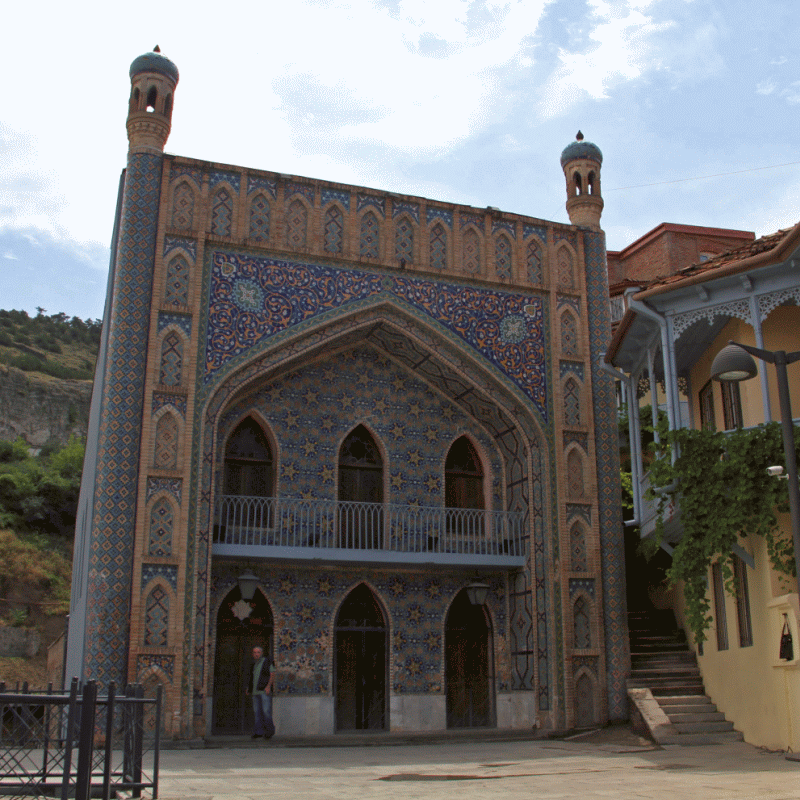
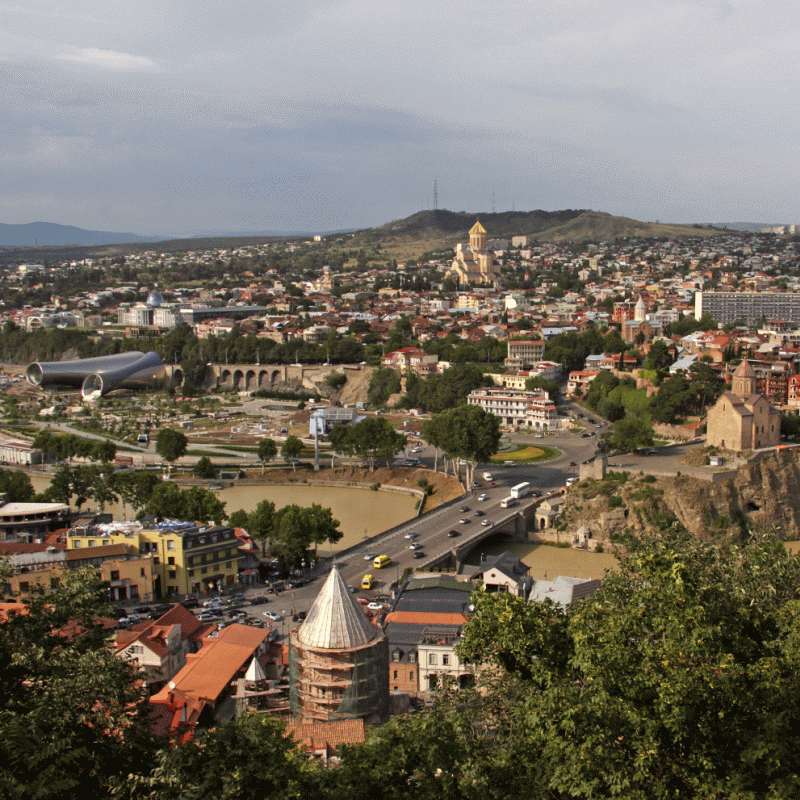
Arrival in Tbilisi in the early morning hours. Transportation to hotel and accommodation, late breakfast. Then take a city tour of Tbilisi with a local guide. Known as the capital of Georgia since the 5th century, the city is special for its tumultuous history, elegant and impressive architecture. Destroyed and rebuilt over the centuries, it managed to preserve all the values and traditions of the Georgian Orthodox faith. We will walk through the Old Town, visit the 13th century Metekhi Church, the Sulfur Thermal Bath, the 4th century Narikala Fortress, the Sioni Cathedral, originally built in the 7th century and the 6th century Anchiskhati Basilica. In the afternoon you will visit the National Museum with an extremely beautiful and rich collection, where you will learn about the richness of the very ancient Georgian culture. In the evening walk along Rustaveli Avenue in the center of the city, where we will have dinner in a traditional Georgian restaurant. Overnight stay in a hotel.
Day 3: PAST AND RECENT PAST
After breakfast, drive west to the remains of Upliststikhe. The city carved into the rocks was inhabited from ancient times to the Middle Ages and you can visit its remains today. Then we will drive to the town of Gori, where we will visit the Stalin Museum, which testifies in an interesting way to the life of the former Soviet dictator. After that we will drive south to Borjomi National Park where we will have dinner and spend the night.
4. dan: NP BORJOMI
A hike along one of the many trails in Borjomi National Park, where three climatic zones meet, which of course affects the vegetation. The path leads us from the village of Likani through beautiful forests to the top of the ridge, from where we can enjoy a magnificent view. Slowly we descend back to the valley, beautiful in every season and known for its biodiversity. After about 6 km of walking together, we will drive to the village of NP Borjomi and then return to the hotel, where we will have dinner and spend the night.
Day 5: QUEEN TAMAR AND SAINT NINO
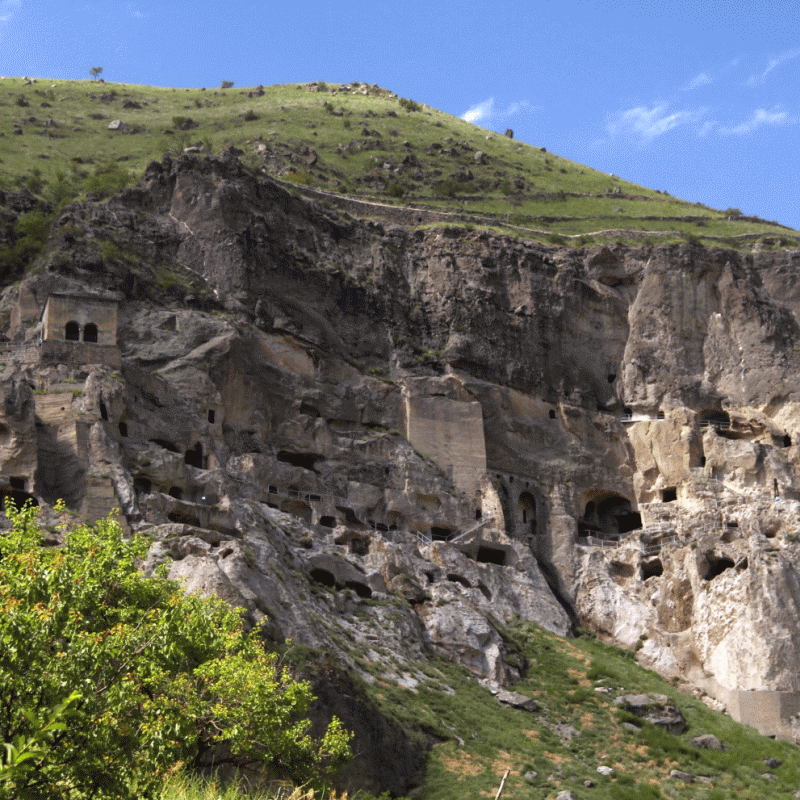
A day to get acquainted with famous women from Georgian history. First we will drive to the monastery complex near the Turkish border, where we will see the remains of the former great monastery and residential complex of Vardzia. Queen Tamara, one of the most prominent Georgian leaders of all times, is said to have helped in its construction. Lunch by the Mtkvari River will be followed by a drive along the plateau of Javakheti province to the largest lake Paravani, where Saint Nina, who spread Christianity in Georgia in the early 4th century, is said to have spent some time. We will return to Tbilisi where we will have dinner and spend the night in the hotel.
Day 6: THE OLDEST WINE
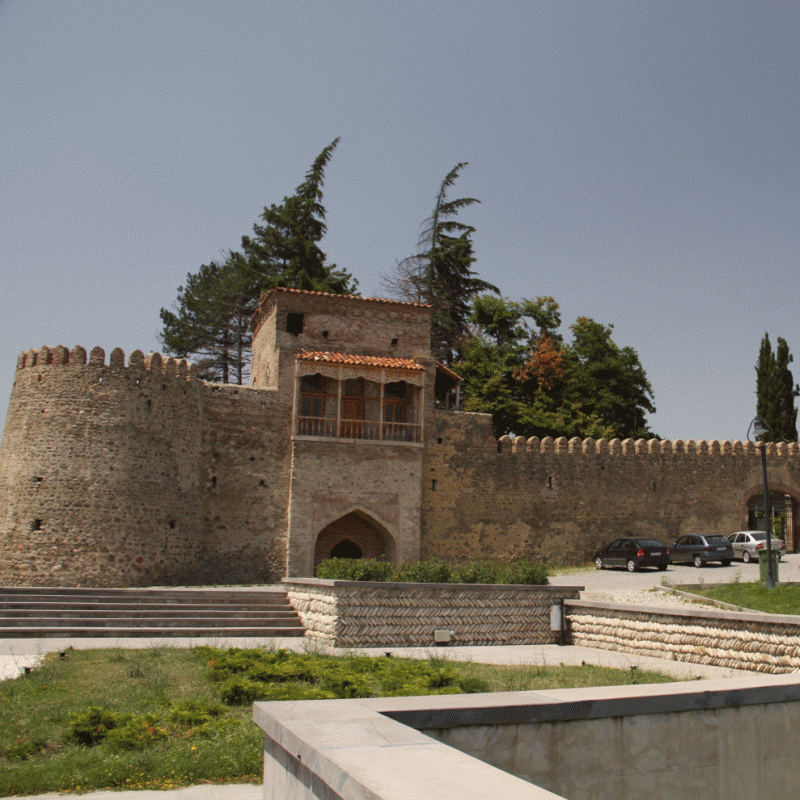
In the morning, the route takes us towards SE of the country, first to the small town of Signaghi, which is a real architectural jewel of the province of Kakheti, renovated. After a short walk we will reach the last town in the south, Dedoplitskaro, where we will hike across Eagle Canyon, known for its variety of birds of prey and interesting vegetation. After the hike we will stop at one of the most famous wineries, where the famous Georgian wine is still produced in the traditional way. We will treat ourselves to wine tasting and dinner and spend the night with the locals.
Day 7: SAVANNAH NP VASHLOVANI
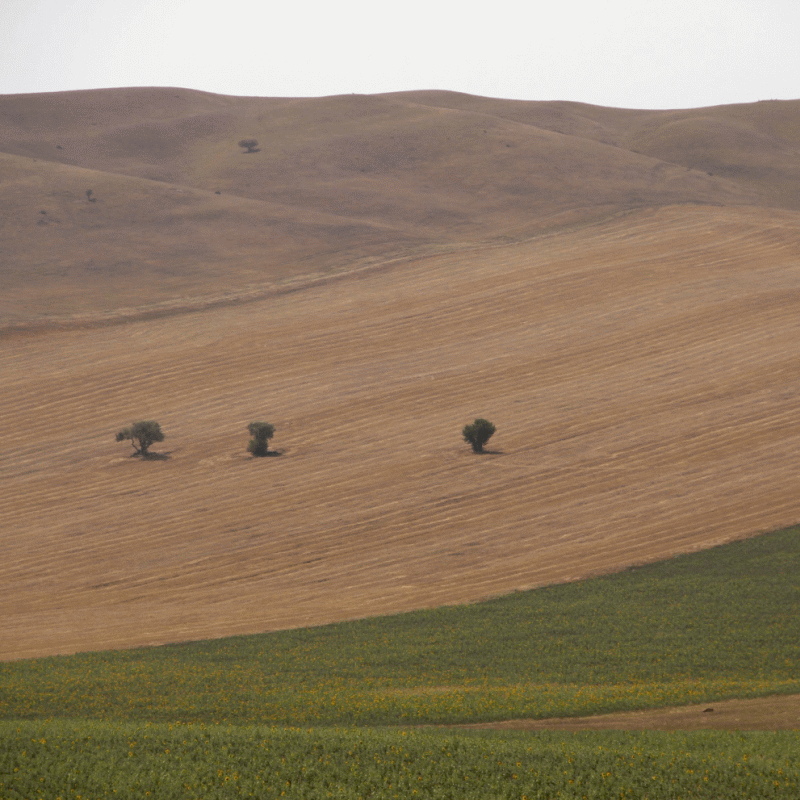
We start the day with a visit to the information center NP Vashlovani. Then we will drive to the heart of the park, where we will first see the gorge with the dry bed of Pantishari. Here is the only nesting colony of House Martins (Delichon urbicum) in Georgia. We will continue to the edge of the Strict Reserve and see the characteristic semi-steppe landscape and continue to the savannah with characteristic species of pistachio (Pistacia mutica) and juniper (Juniperus foetidissima, J. polycarpusus and J. rufescens) accompanied by Caucasian nettle (Celtis caucasica) and wild pears (Pyrus sachokiana, P. salicifolia and P. georgica). During the ride we are accompanied by many curious bee-eaters (Merops apiaster) and goldfinches (Coracias garrulus). Then we will drive towards the Azerbaijani border along dry riverbeds to the Alesilebi Natural Monument, where we will learn about the geomorphology of the area and the characteristic layers of sandstones and mudstones that have been exposed to erosion over the last 2 million years and have therefore formed into beautiful shapes. After the tour we will return to Dedoplitskaro for dinner and overnight stay.
Day 8: FROM DRY STEPPE TO HUMID FOREST
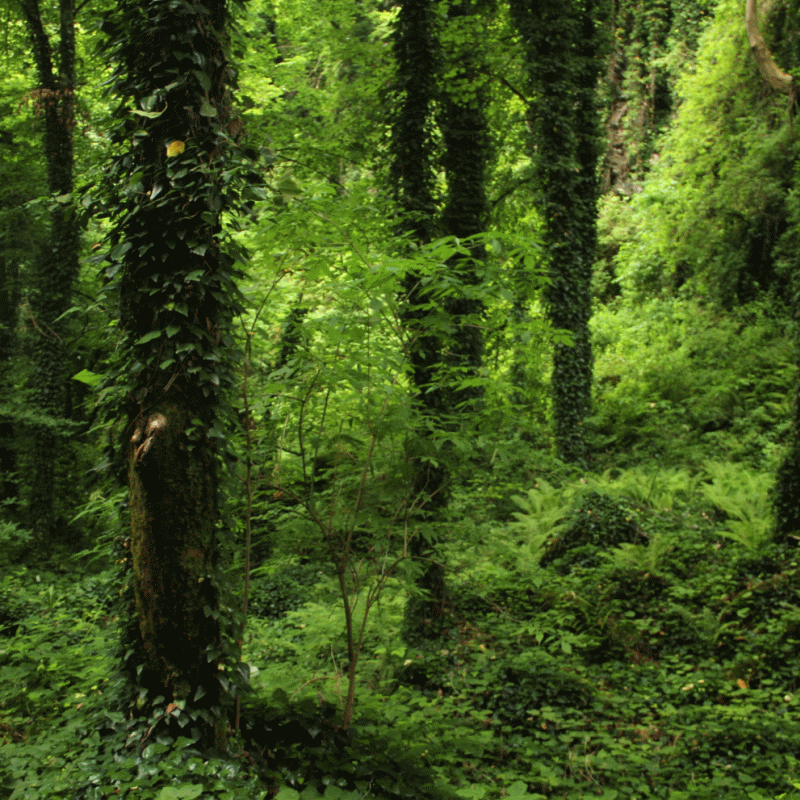
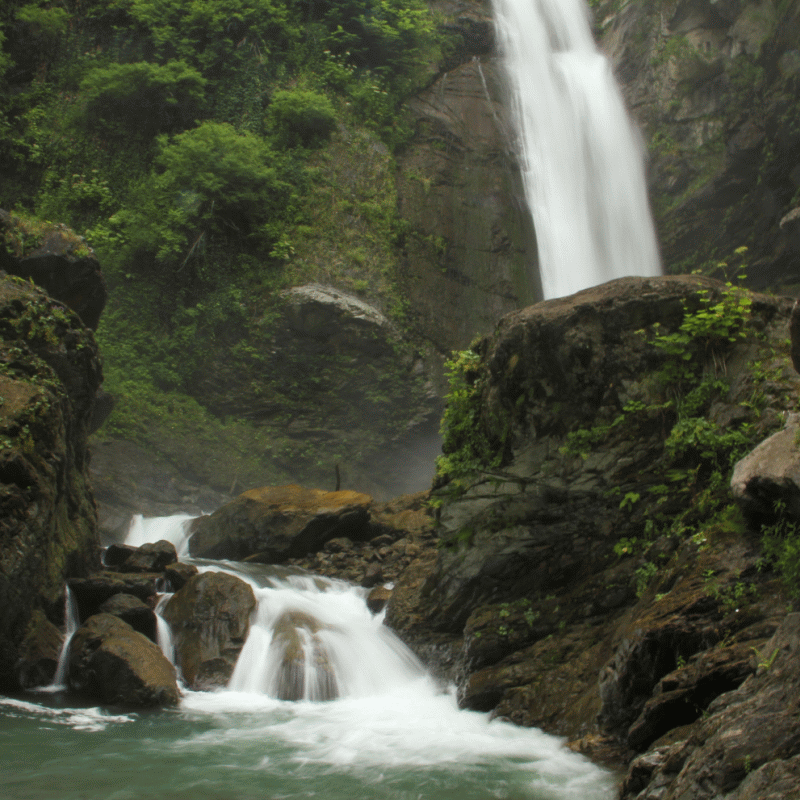
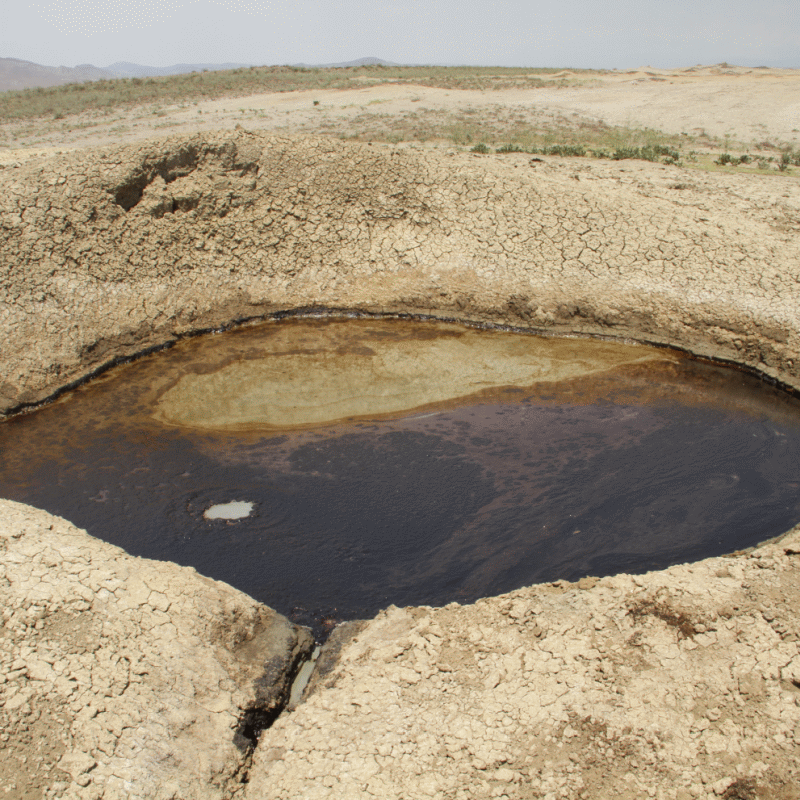
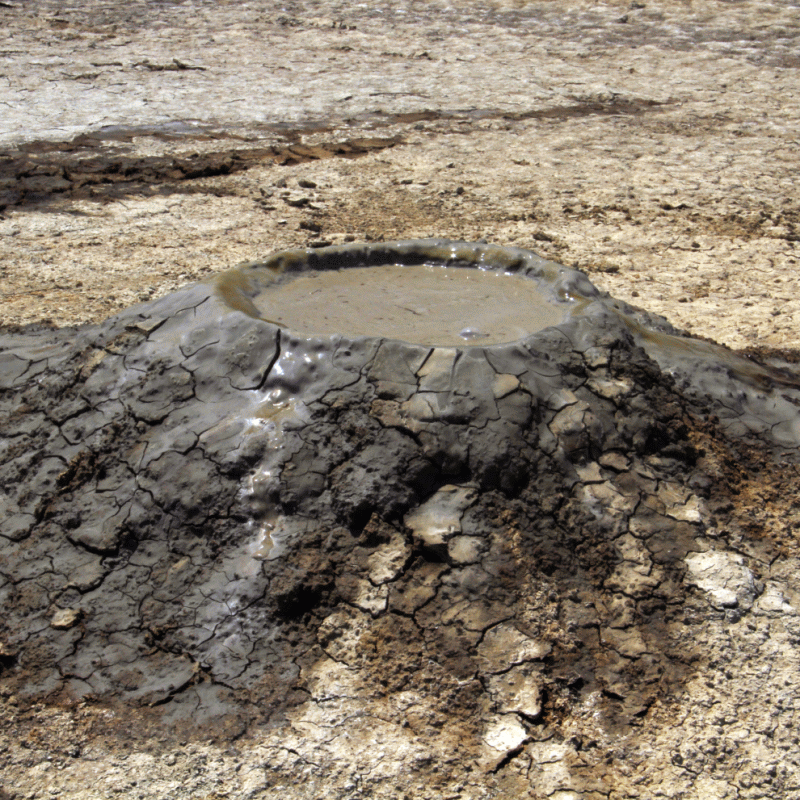
We spend the morning on the western edge of Vashlovani National Park, seeing the Takhti-tepha mud volcanoes and learning about the salt-loving vegetation in this area. In the afternoon we head east to Lagodekhi NP and see a humid "subtropical" forest, the complete opposite of what we will see in the morning. We will hike to the magnificent Big waterfall. Dinner and overnight with locals in Lagodehki.
Day 9: OVER THE HIGHIEST PASS IN GEORGIA
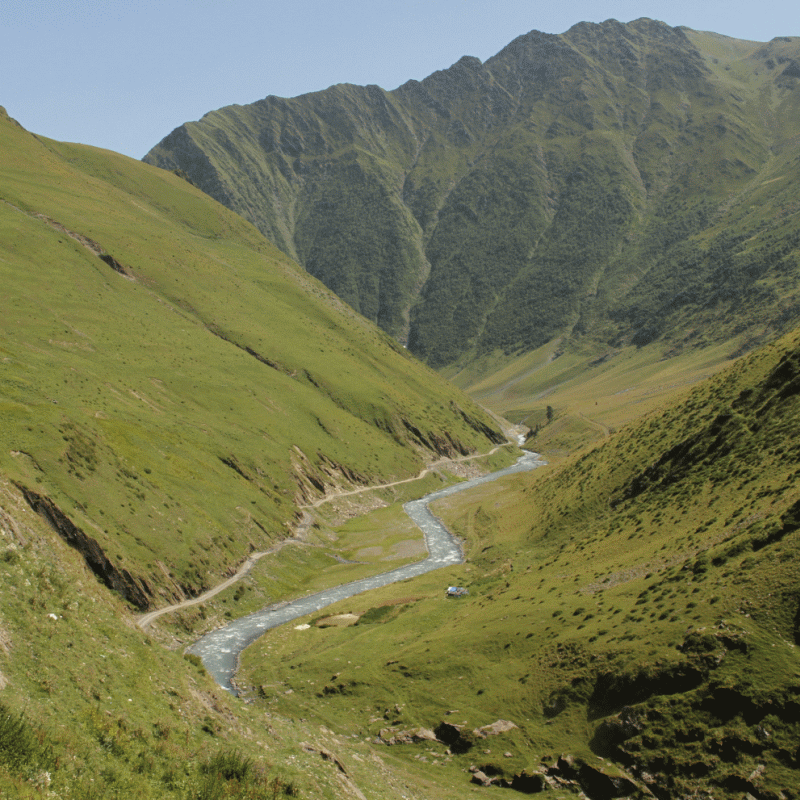
In the morning we leave Lagodekhi and drive towards NE of the country to NP Tusheti. The route first takes us past numerous vineyards and fields to the Alazani River, where the road begins to climb to the highest traffic pass in Georgia, the Abano Pass at 2,826 meters above sea level. In some places the road is carved into the slate slopes and offers wonderful views of the High Caucasus Mountains and numerous waterfalls. Endemic pines (Pinus sosnowskyi), birches (Betula raddeana and B. litwinowii), partridge (Sorbus caucasigena) and many other species grow on the slopes along the road. After a few hours of driving and some breaks for tea, coffee and snacks we will reach the center of the Tusheti region, Omalo. There we will have dinner and an overnight stay with hospitable locals.
10. dan: MED STOLPI IN POGANSKIMI VEROVANJI
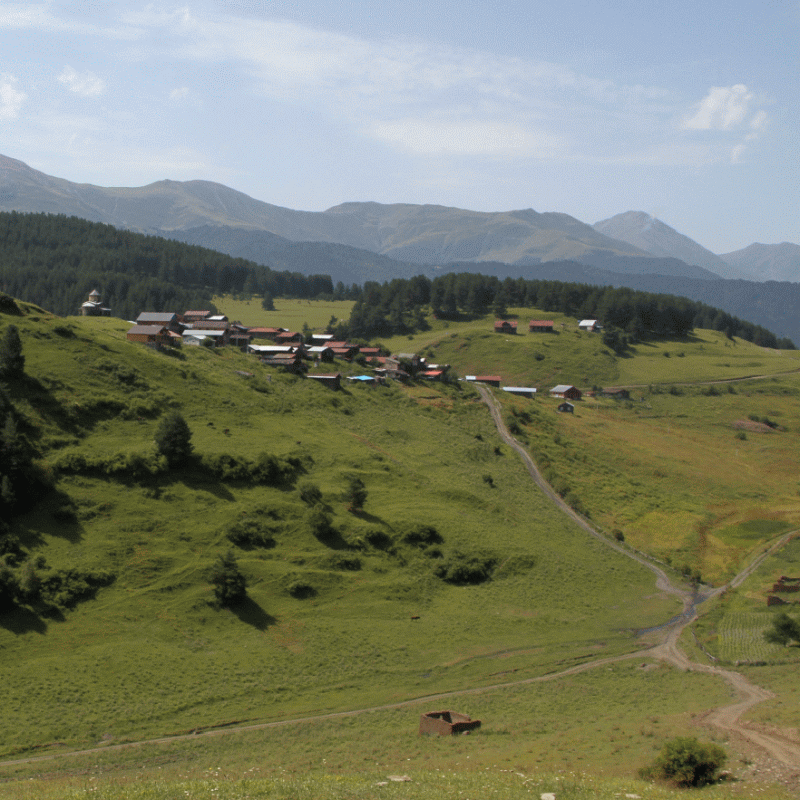
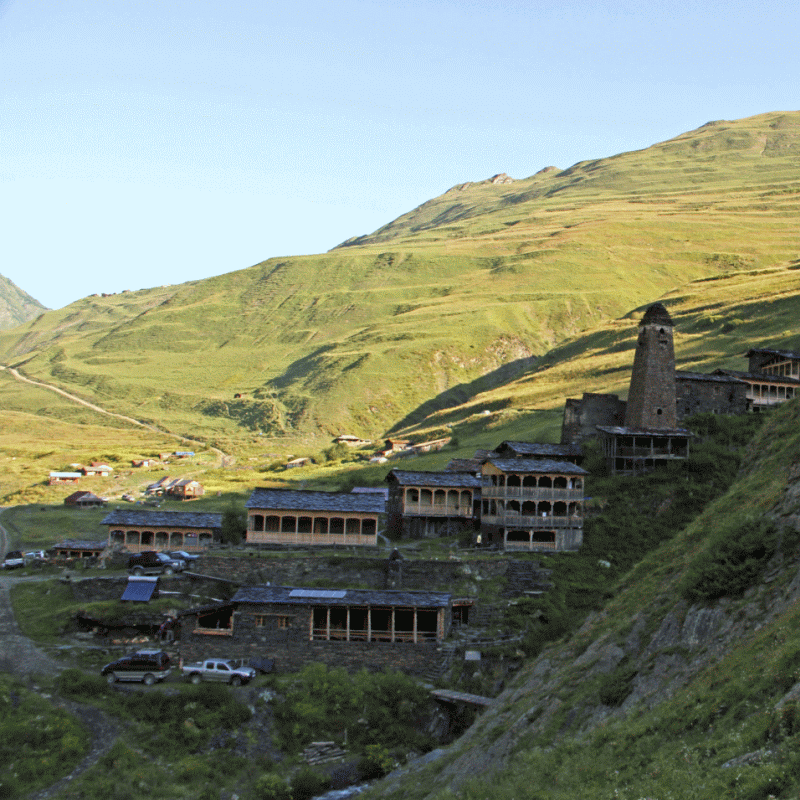
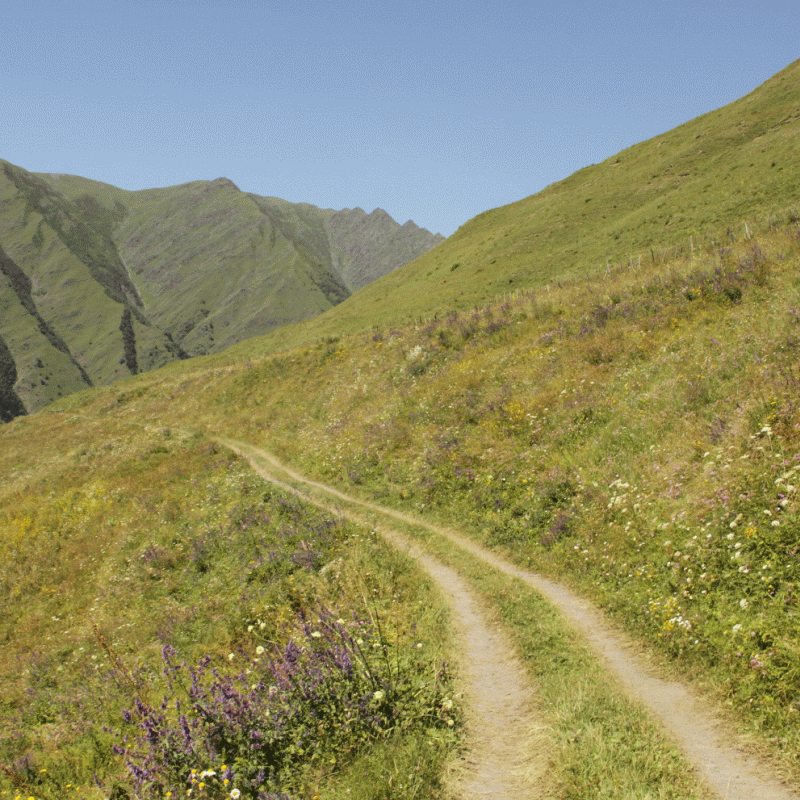
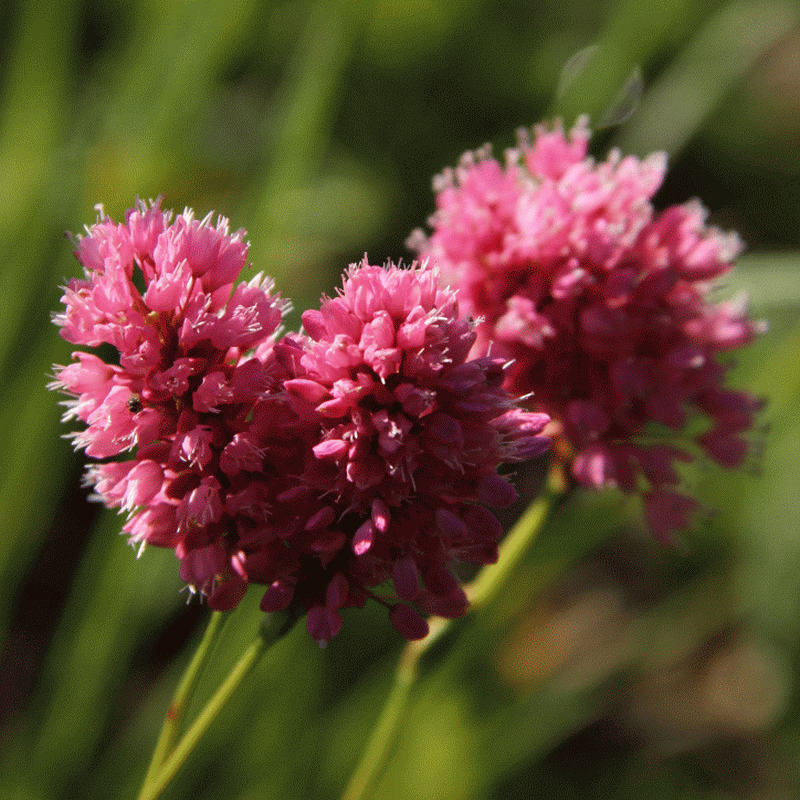
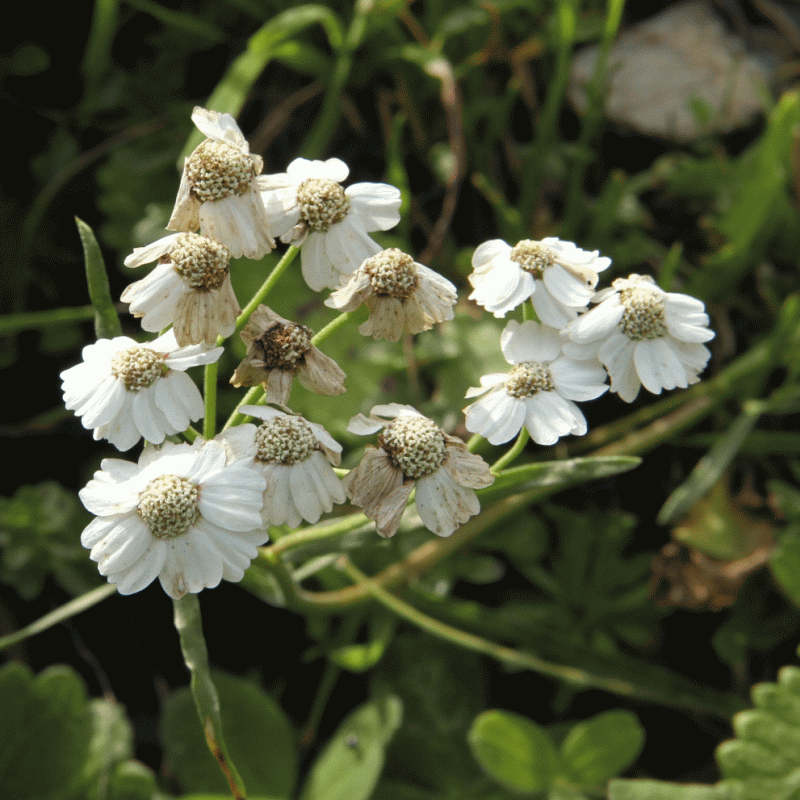
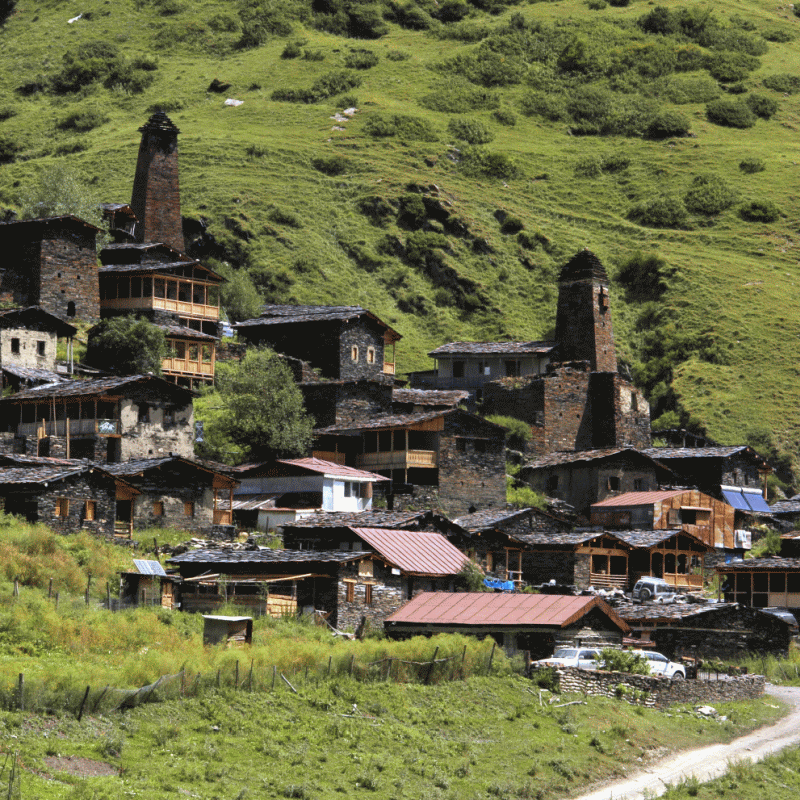
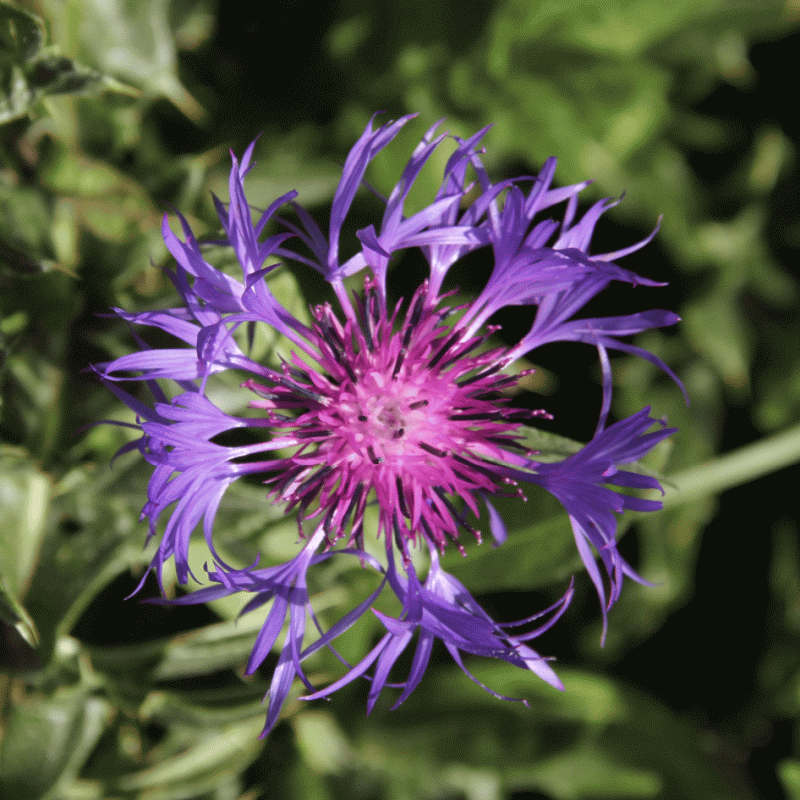
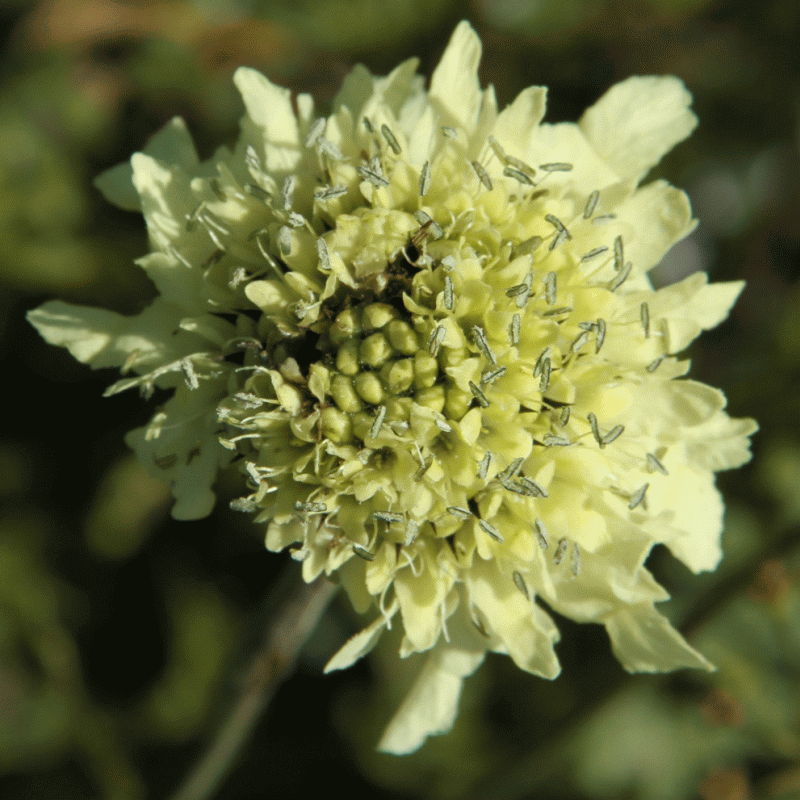
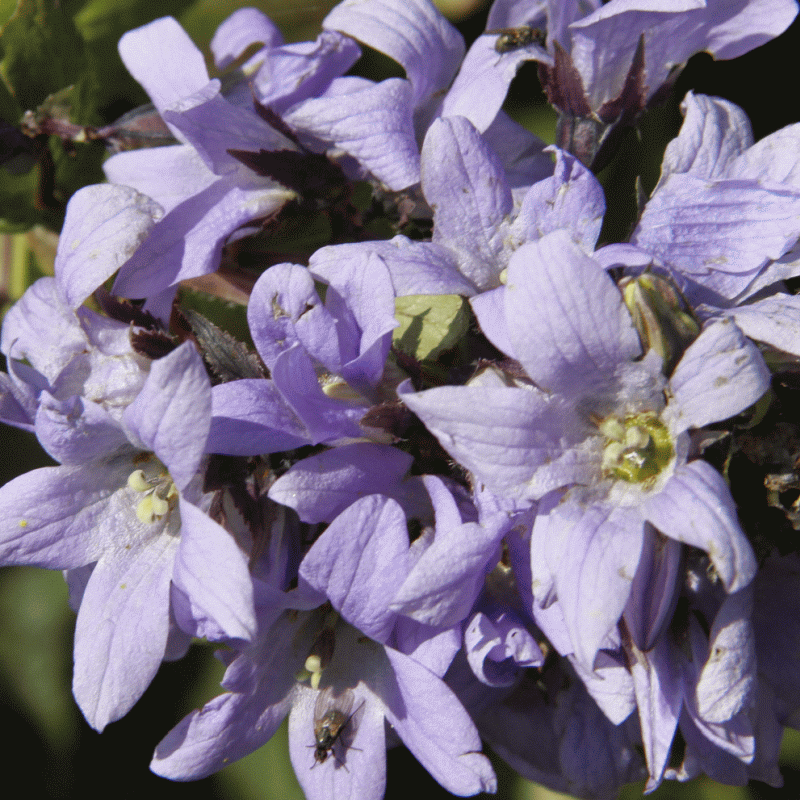
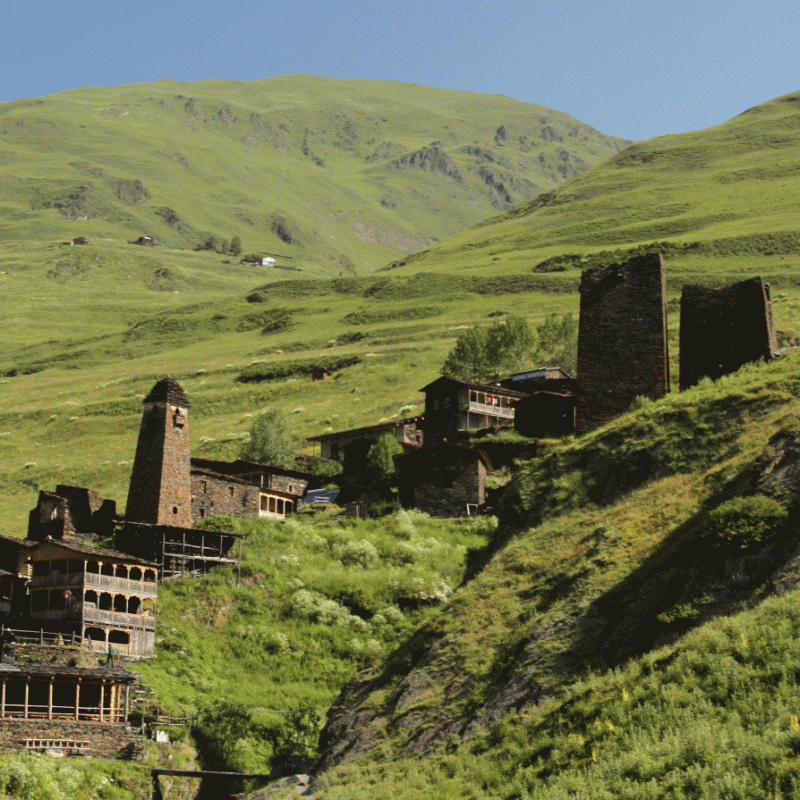
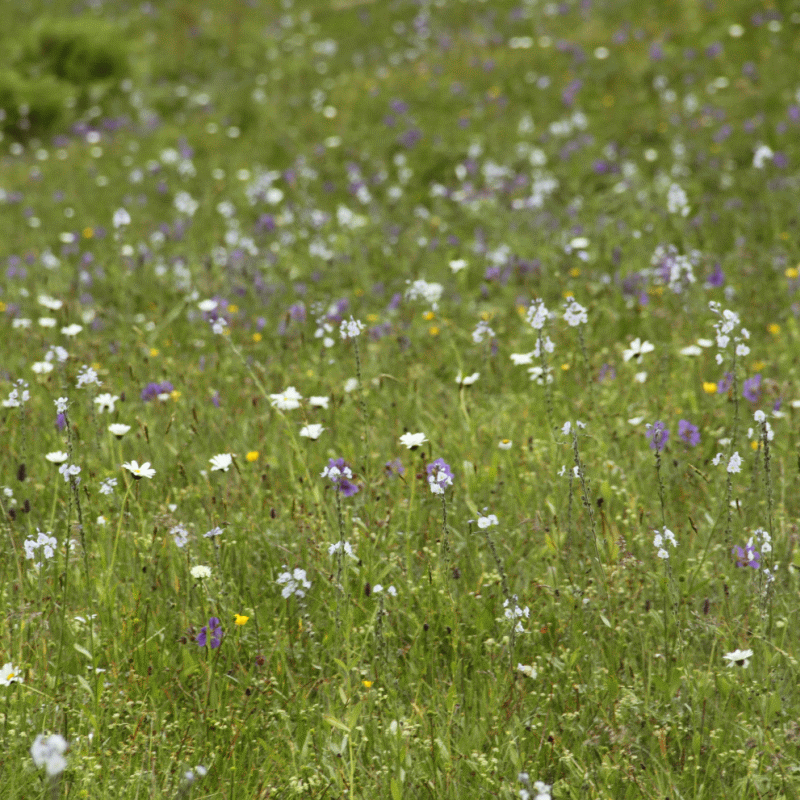
After breakfast we will drive to the village of Dartlo and learn about the pagan customs that are still alive in these places. We take a hike to the villages of Kvavlo and Dato (a 3-hour walk) and in the meantime we get acquainted with the typical flora of the meadows with lush vegetation, among which some endemics thrive: bellflower Campanula petrophila, lily Lilium monadelphum, Tushetia rosehip Rosa tushetica and goldenrod Ranunculus tebulassicus. The most common species are the giant head (Cephalaria gigantea), Sosnovski's raindrop (Heracleum sosnowskyi), spotted mouse (Conium maculatum), snake's gorse (Polygonum bistorta), forage hawk moth (Galega orientalis), large-flowered cypress (Stachys macrantha) and many other species. We will return to the village of Dartlo, where we will have dinner and spend the night with the locals.
11. dan: TUSHETI
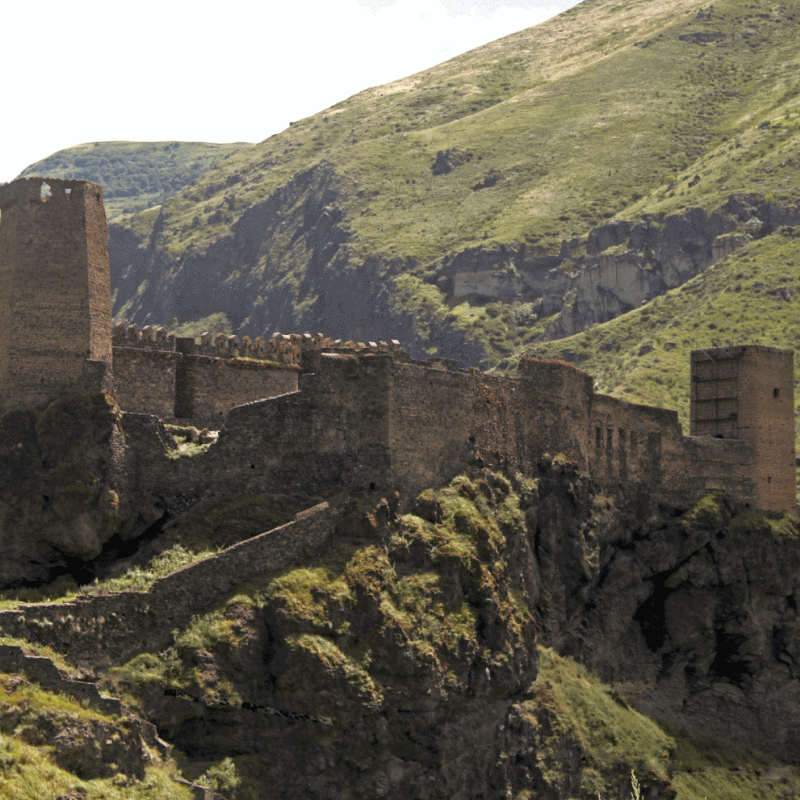
After breakfast we return to the village of Omalo and climb the fortress there, which consists of many defense towers. After breakfast we go back over the Abano Pass into the valley to the town of Telavi. The town is the center of Kahketi province and the former capital from the reign of Heraclius II. Dinner and overnight stay with the locals.
12. dan: KHEVSURETI
Another day we will spend mostly driving: From Telavi, the route takes us to Tianeti and from there on the new panoramic road to the Zhinvali reservoir, where we turn into the province of Khevsureti and drive along the Aragva River to the picturesque village of Roshka. There we will stay with the locals and take a walk around the area, followed by dinner and overnight.
13. dan: JEZERA ABUDELAURI
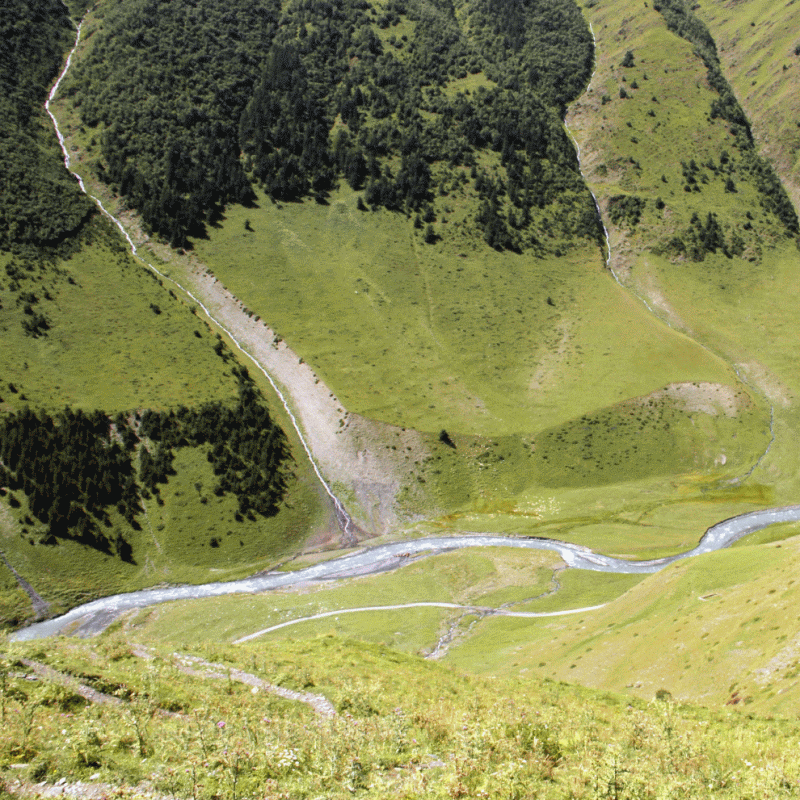
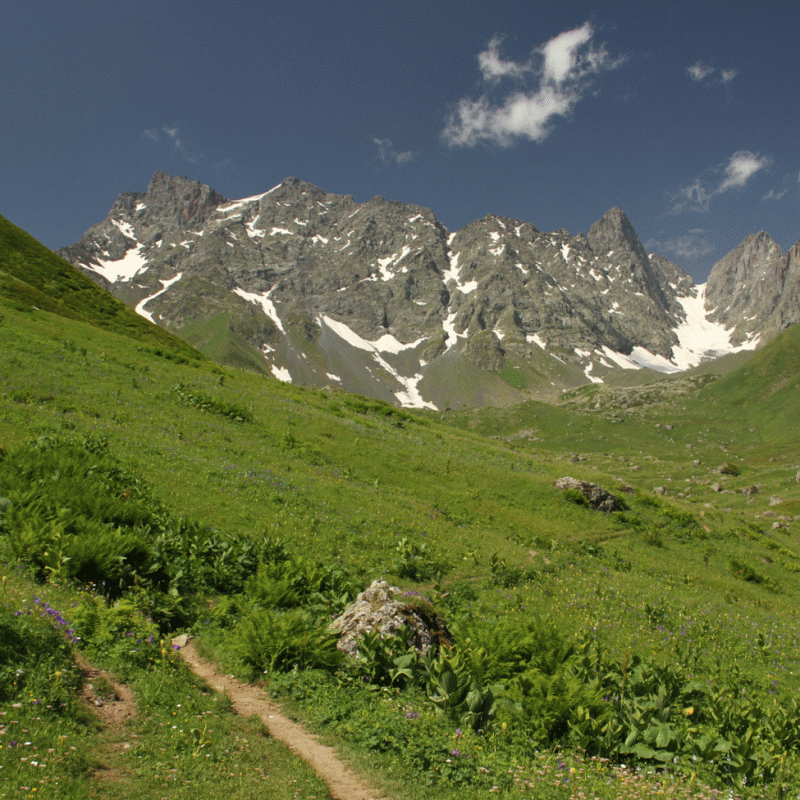
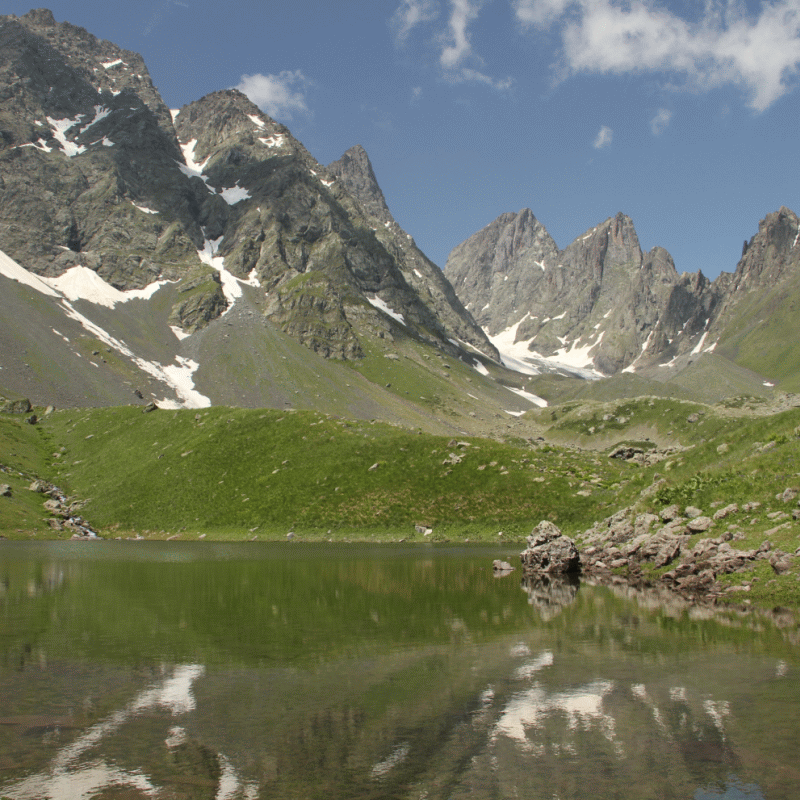
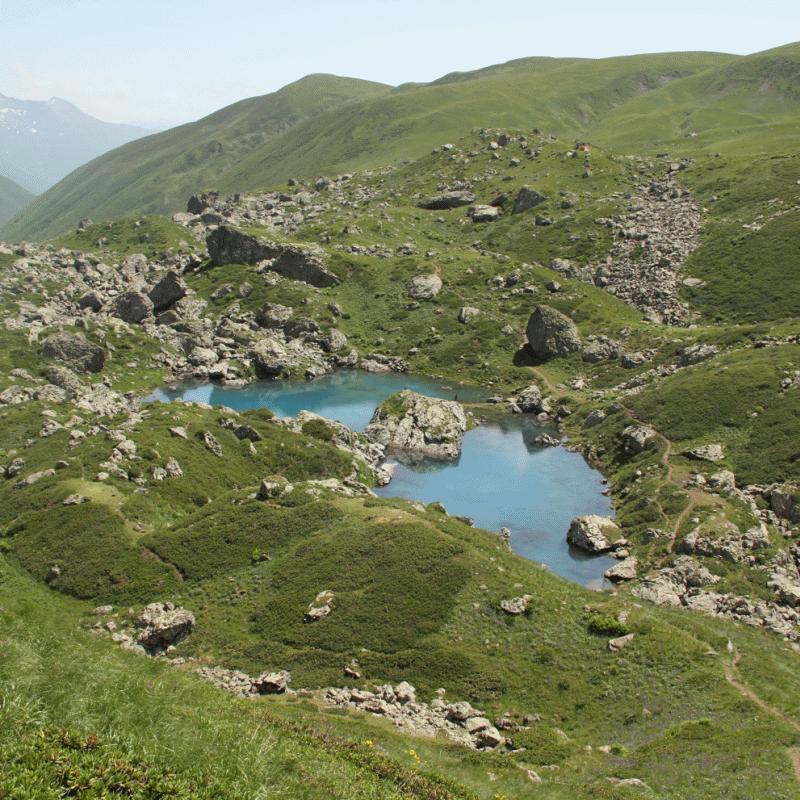
From the village of Roshka we take a full day hike to the famous lakes: Blue, Green and White. The path climbs gradually along the edge of the glacial valley between many pastures and leads us first to the Green Lake, a few minutes away is the Blue Lake. The path to the White Lake will be a challenge only for the most prepared and courageous hikers, as it is poorly marked in some places. On the way we will get acquainted with the typical high mountain flora. After lunch break and rest, we will return along the same path to the village of Roshka, where we will have dinner and spend the night. The lakes are also associated with ancient pagan legends and customs. About 5 hours folded hike.
14. dan: STARODAVNI KAVKAZ
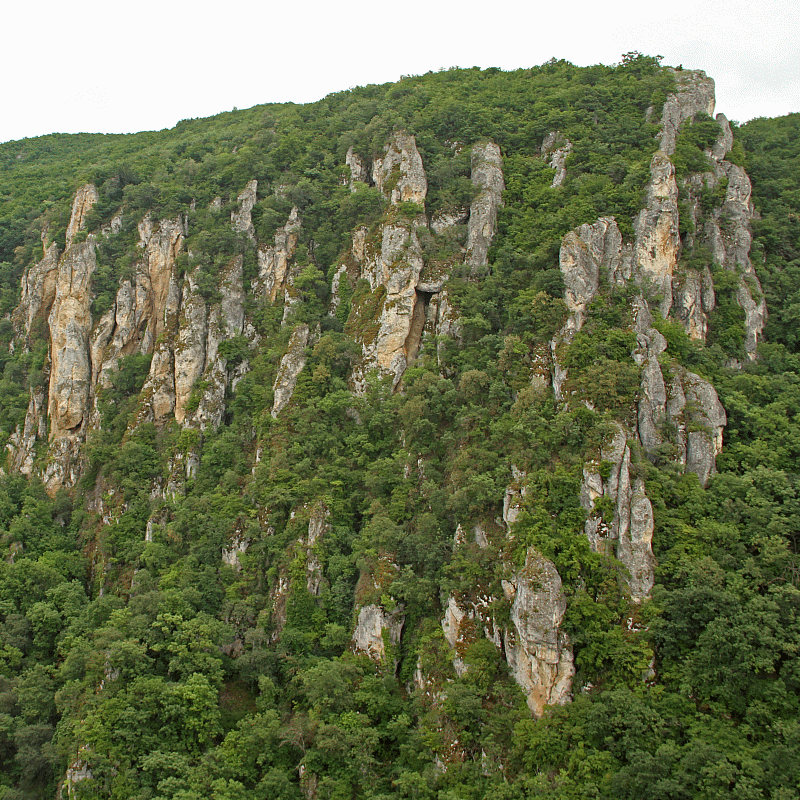
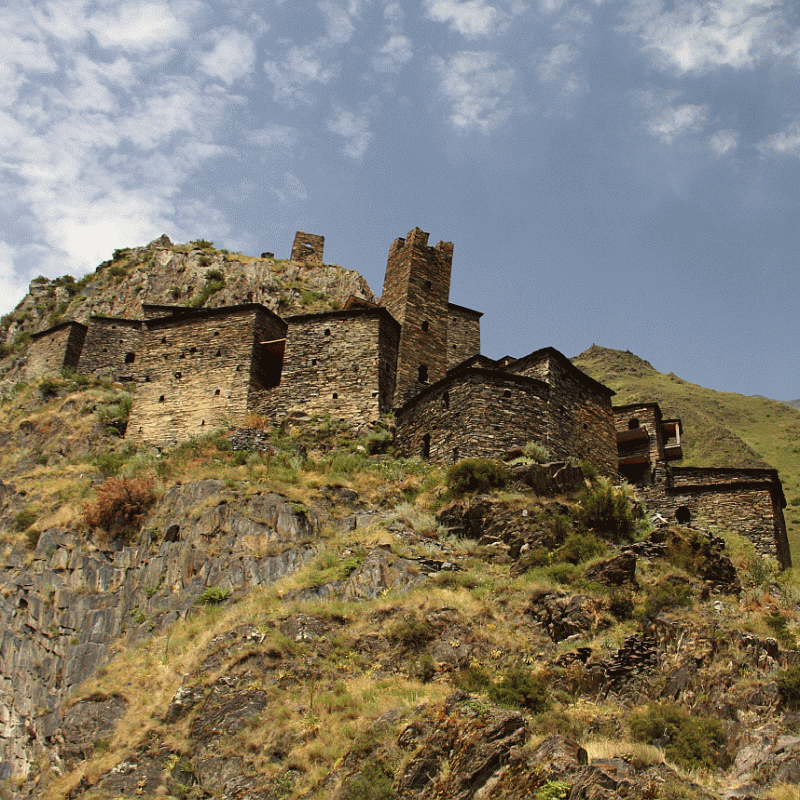
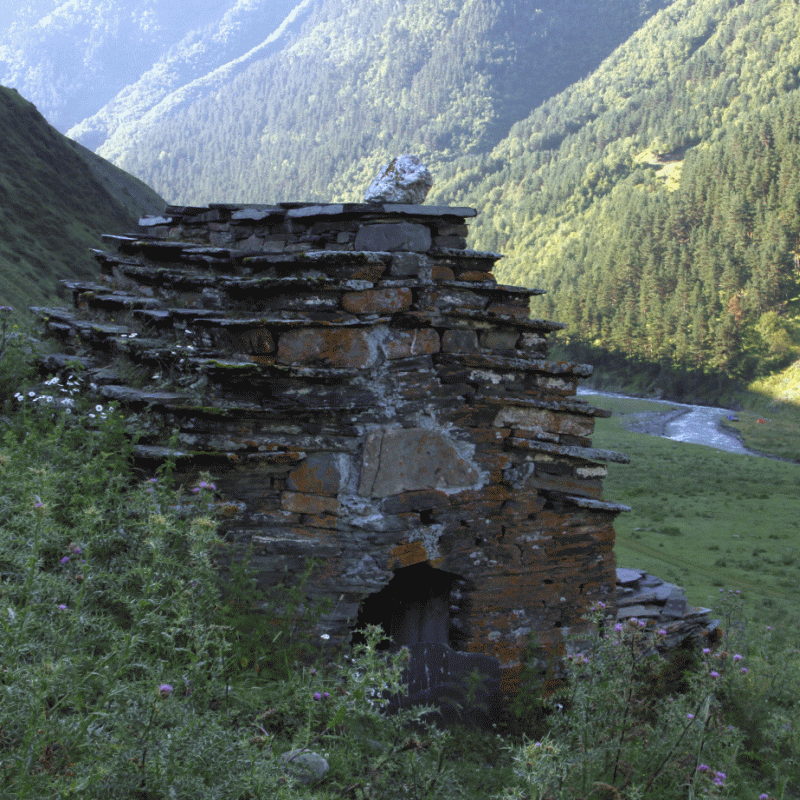
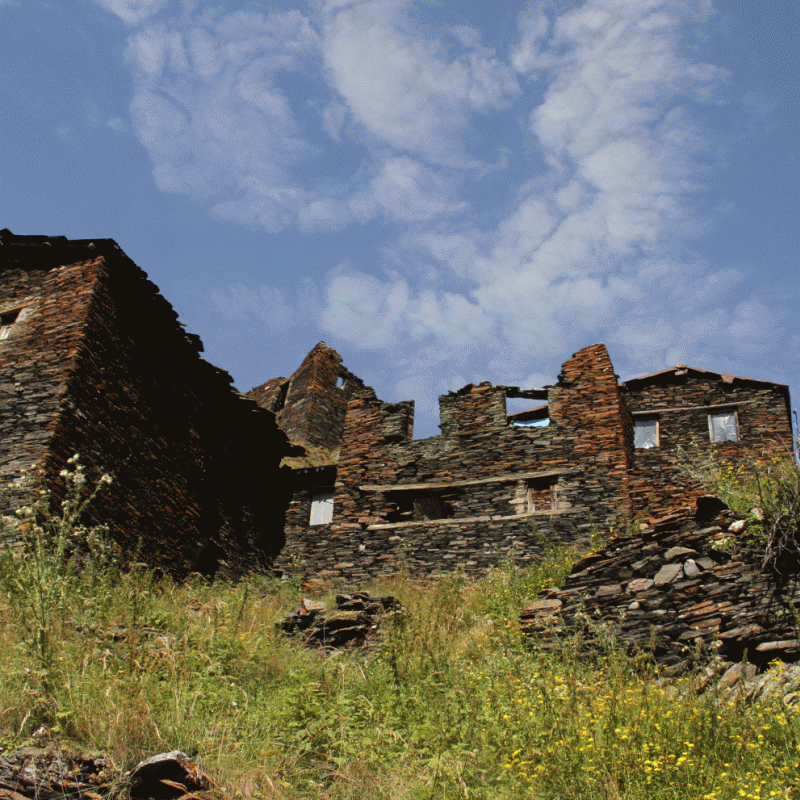
We leave the village of Roshka and drive along the Aragvi River valley towards the Datvis jvari pass ("Bear's Cross", 2,689 m above sea level) and continue towards the famous village of Shatili, which consists of many fortified towers and looks like a single fortress. We walk through the village and then continue to the deserted village of Mutso, where we see the beautiful sandstone pyramids on the way. Mutso village could be called "Caucasian Machupichu" because it is located on a ridge that is difficult to access and was an impregnable fortress for many. Although no one lives in the village anymore, it is alive as it is being renovated, and it is also visited by a growing number of tourists. After sightseeing we return to Shatili village and also stop at the former Chiral, a monument to the once extremely hard life in remote Caucasian villages. Dinner and overnight stay with locals in Shatili village.
15. dan: SVETI KRAJI
Leaving the high altitude villages, on the way to Tbilisi we stop in the city of Mtskheta - the ancient capital of the Kingdom of Kartli-Iberia, which was known as a political and cultural center from the 3rd century. Drive to the 6th century Jvari Monastery, famous for its very harmonious proportions and representing the higher early medieval Georgian architecture. Then visit the architectural monument - Svetitskhoveli Cathedral from the 11th century. After the visit you will drive to nearby Tbilisi, where you will have time for a walk through the city center, dinner and overnight.
16. dan
Early in the morning you will drive to the airport and make your way to Slovenia.
Legend: B – breakfast, L – lunch, LB – lunch box, D – dinner.
Author of the program and photos: © Janja Benedik.
Organizer and provider of the program: naTOURa, potovalna agencija, Janja Benedik s. p., 2019-2026.
The price depends on the number of participants:
8-9 participants: 3.165,00 € + flight ticket,
10-11 participants: 2.7600,00 € + flight ticket,
12-13 participants: 2.645,00 € + flight tickts,
14-15 participants: 2.445,00 € + flight ticket.
Flight ticket price: from €400.00.
The price includes:
- Transportation around Georgia using 4x4 vehicles (Delica), including all associated costs as per the programme;
- 14 x half board (breakfast, dinner), 1 x overnight stay with breakfast: 2 x overnight stays in a 3* hotel (Tbilisi), overnight stays with locals (guest house) in other locations;
- all entrance fees for museums and national parks according to the program, 1x wine tasting;
- accompanied by a local tour guide and guided by a licensed Slovenian tour guide with good knowledge of all destinations;
- costs of travel preparation and organization.
Price does not include:
- additional food and drinks are not included in the price of the arrangement;
- additional entrance fees for all tours that are not part of the program;
- possible additional trips around Tbilisi (metro, cab);
- possible tips for guides and local drivers.
Surcharge on request:
- single rooms: 220,00 €;
- Trip cancellation insurance;
- Travel insurance.
POSSIBILITY OF PAYMENT IN 6 INSTALLMENTS.
- during the stay in Georgia the travellers are not covered by special health insurance and there is no insurance coverage for property or other damages (personal injuries, theft, car accidents, kidnapping, terrorist attacks, riots in the country, natural disasters such as earthquakes, fires, floods, avalanches, ...)
- we are not responsible if in case of natural disasters, such as earthquakes, fires, floods, landslides, ... the travel program must be changed,
- we are not responsible for accidents or injuries during trekking and their consequences,
- in the event of an increase in the price of gasoline, hotels, airline tickets or other prices, the price of the arrangement may increase,
- we are not responsible for cancellations, delays or changes of flights of airlines and their consequences (higher costs, non-implementation of the entire programme),
- if the airline cancels the flight and it is taken over by another airline, we will not cover any additional costs,
- we do not assume the consequences of loss of luggage during air transport, all possible costs are borne by the passenger.
- special medical care (e.g. vaccination) is not required before departure.
The program also includes some hikes for which average physical fitness is sufficient. If you do not want to or cannot participate in the hikes, an alternative program will be organized.

You are probably interested,
WHY DO WE TRAVEL IN 4X4 VEHICLES?
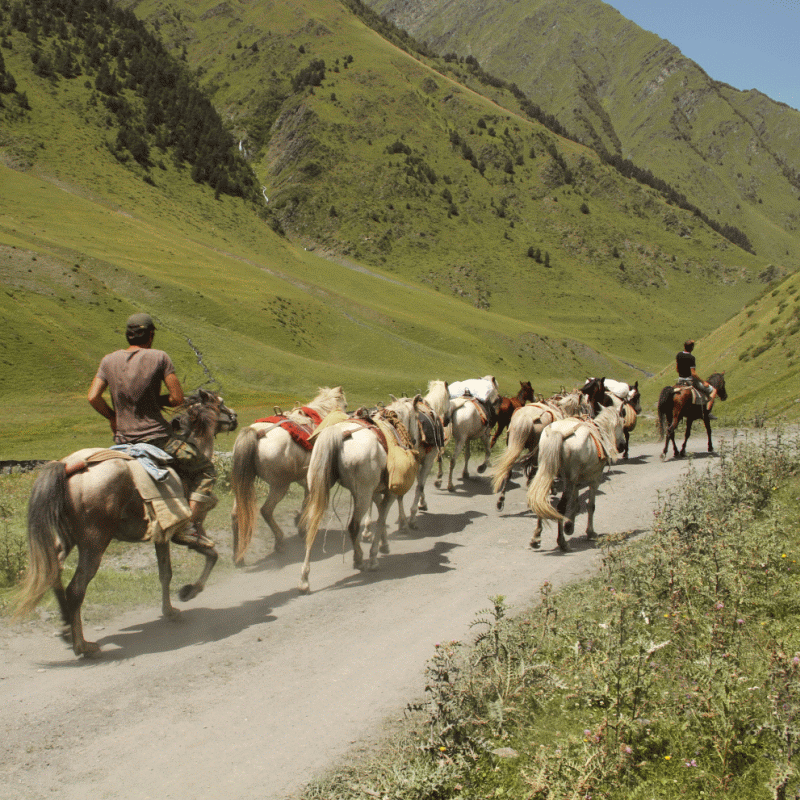
Because we travel through areas where the roads are too poor for a bus, we can discover the most beautiful and hidden corners of Georgia, which are extremely attractive and rarely visited by most tourists. Unfortunately, this results in a higher price for the package.
WHY DON'T WE VISIT THE SVANETI VALLEY?
The Svaneti Valley has been heavily influenced by tourism for over two decades, which is why many architectural and other elements have lost their original charm. All the characteristics of the High Caucasus can therefore be seen in the valleys of Tusheti and the surrounding area, so travellers are not deprived of anything, but even have the opportunity to see and experience a more authentic Georgia.
WHY DON'T WE VISIT KAZBEGI?
The main route to Russia passes through Kazbegi, making it accessible by bus, which in turn brings more tourism—perhaps even too much for my liking. Some locations that were recently free, have now started charging an entrance fee. As we wish to avoid mass tourism wherever possible, we skip this valley and visit the neighbouring valley, which is more difficult to reach. As a result, there is not yet mass tourism there, but we are able to experience the ancient architecture, customs, and legends that have mostly disappeared elsewhere.
WHY ARE ONLY THE EASTERN AND CENTRAL PARTS OF GEORGIA INCLUDED IN THE PROGRAMME?
Part of western Georgia is covered by the Svaneti Valley; the reason for not visiting is stated above. Along the Black Sea, you could only visit Batumi, the Georgian “Portorož” or, more accurately, “Hollywood”, which I personally consider a waste of valuable time, as the journey there is lengthy. The south-western part of Georgia would be worth visiting, but it is only just opening up to tourism and may be included in my plans in the future. In any case, a good two weeks is not enough to get to know Georgia well. Although the country is not small, the road connections are far from ideal, despite significant renovations in recent years. For Slovenians, the eastern and western parts of Georgia do not differ so much that missing the western part would mean missing out on anything essential.
I present three accounts of my previous travels and impressions from visiting Georgia: